

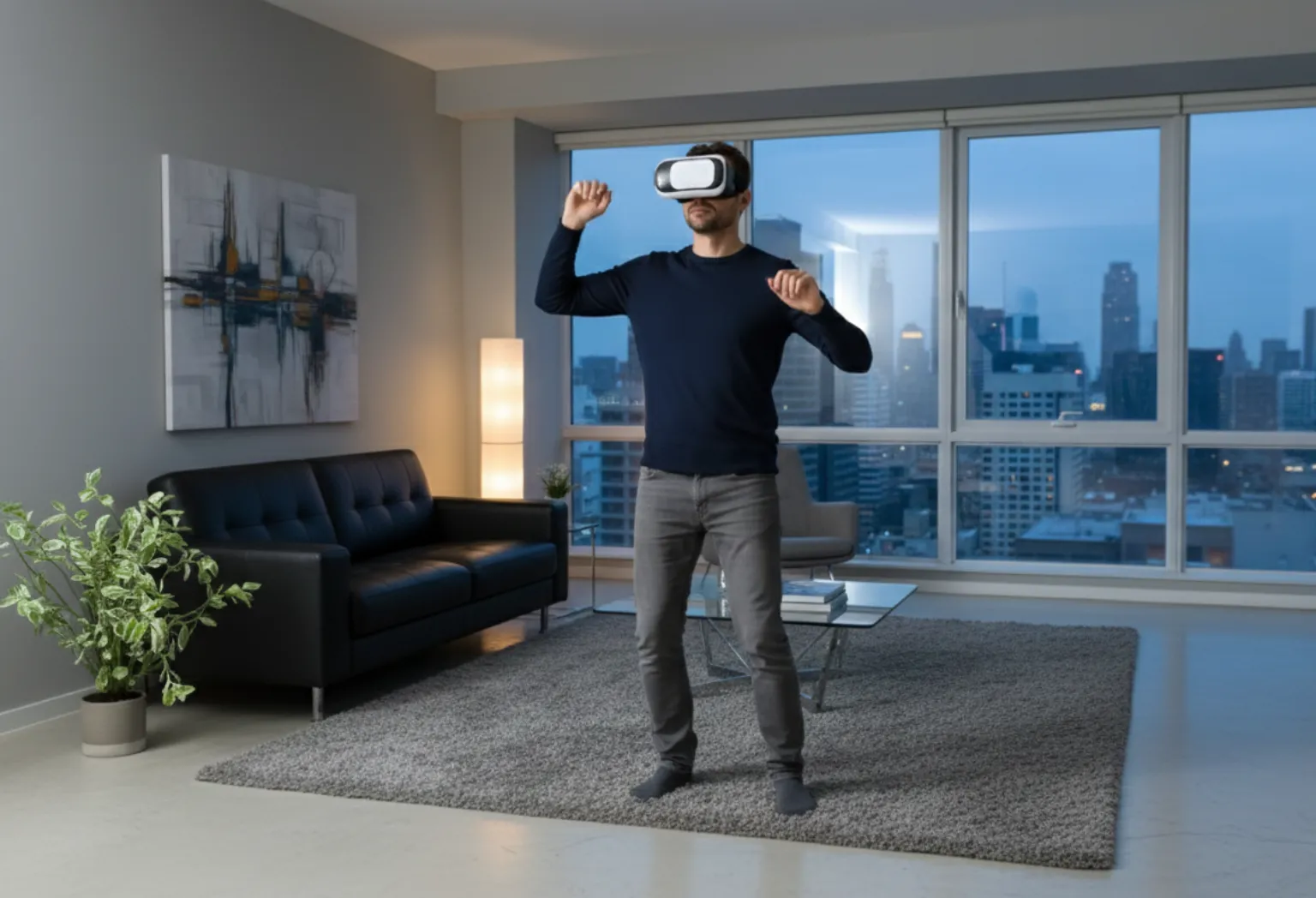
Virtual reality gaming has moved far beyond simply placing a screen in front of a player’s eyes. While head-mounted displays were the first major step, modern VR experiences aim to engage the entire body and multiple senses simultaneously. The goal is no longer just to see a virtual world, but to feel, hear, and physically exist within it.
This evolution is redefining immersion. Haptics, spatial audio, and full-body tracking are transforming VR from a visual novelty into a deeply embodied experience that blurs the boundary between the digital and physical worlds.
Moving Past Visual-Only Immersion
Why Headsets Alone Are No Longer Enough
Early VR focused heavily on visuals, emphasizing resolution, field of view, and refresh rates. While these elements remain important, they are only part of what makes an experience feel real. Without physical feedback or accurate audio cues, virtual worlds can feel hollow or disconnected.
True immersion requires sensory consistency. When players see an object, they expect to hear it from the correct direction and feel interaction when touching or colliding with it. This expectation has driven innovation beyond traditional headsets.
The Shift Toward Multi-Sensory Design
Modern VR design treats immersion as a full sensory equation. Visuals are now complemented by tactile feedback, realistic sound positioning, and body-aware interactions. This multi-sensory approach creates presence—the psychological feeling of truly being inside a virtual environment rather than observing it from the outside.
Haptics: Giving Virtual Worlds a Sense of Touch
Understanding Haptic Technology in VR
Haptics simulate touch through vibrations, resistance, or pressure feedback. In VR gaming, haptic technology allows players to feel actions such as impacts, textures, recoil, or environmental effects.
Haptic systems can include:
- Controller vibrations and adaptive triggers
- Haptic gloves for finger-level interaction
- Vests and suits that simulate impact or motion
These tools add a physical layer to virtual interactions, making actions feel meaningful and grounded.
Emotional Impact of Tactile Feedback
Touch is closely tied to emotion. Feeling a heartbeat, the recoil of a weapon, or the impact of an explosion increases emotional intensity. Haptics amplify tension, excitement, and realism, making moments more memorable.
By engaging the sense of touch, VR games create stronger emotional responses than visuals alone could ever achieve.
Advanced Haptics and Physical Awareness
Full-Body Haptic Systems
Beyond controllers, full-body haptic suits allow players to feel interactions across their torso, arms, and legs. These systems can simulate directional impact, environmental pressure, or motion feedback.
In action-heavy or narrative-driven games, full-body haptics enhance presence by aligning physical sensation with visual events, reinforcing the illusion of physical existence inside the game world.
Challenges of Realistic Touch Simulation
Simulating touch accurately is complex. Overuse of vibration can feel artificial, while subtle feedback requires precise calibration. Developers must carefully balance realism and comfort to avoid sensory overload or fatigue.
Despite these challenges, haptic technology continues to advance, bringing more nuanced and believable physical interaction to VR gaming.
Spatial Audio: Hearing the Virtual World
What Is Spatial Audio?
Spatial audio simulates how sound behaves in real three-dimensional space. Instead of coming from a flat stereo source, audio reacts to distance, direction, and environmental obstacles.
In VR gaming, spatial audio allows players to:
- Hear footsteps approaching from behind
- Locate enemies based on sound direction
- Sense room size through echoes and reverb
This auditory realism strengthens situational awareness and immersion.
Audio as a Navigation and Gameplay Tool
Sound in VR is not just atmospheric—it is functional. Players often rely on audio cues to make decisions, react to threats, or explore environments without visual confirmation.
This reliance on sound mirrors real-world perception, reinforcing the feeling of being physically present in the virtual space.
Emotional Storytelling Through Sound
Creating Atmosphere and Tension
Spatial audio plays a critical role in emotional storytelling. Subtle ambient sounds, distant echoes, or directional whispers can evoke fear, curiosity, or calm without visual prompts.
Horror and narrative-driven VR games especially benefit from audio-driven tension, where unseen threats feel real because they sound real.
Synchronizing Audio With Haptics and Visuals
When sound, touch, and visuals align, immersion reaches a new level. A vibration synced with a loud impact or a directional sound paired with physical feedback reinforces sensory realism.
This synchronization ensures that players experience events holistically rather than through disconnected sensory inputs.
Full-Body Presence and Motion Tracking
Beyond Hand Controllers
Modern VR systems increasingly track more than just head and hands. Full-body tracking uses sensors, cameras, or wearable devices to monitor body movement, posture, and gestures.
This enables:
- Natural walking and crouching
- Physical dodging and leaning
- Body language and gesture-based interaction
The result is a more intuitive and expressive form of gameplay.
Psychological Impact of Full-Body Presence
When a virtual body mirrors real-world movement accurately, the brain accepts the virtual self as real. This embodiment increases immersion and emotional investment.
Players are no longer controlling a character—they are the character, experiencing the game through physical presence rather than abstraction.
Social Interaction in Fully Embodied VR
Realistic Multiplayer Interactions
Full-body tracking enhances social VR by allowing players to express themselves through gestures, posture, and movement. Conversations feel more natural when body language is visible.
This realism improves social bonding, collaboration, and emotional communication in multiplayer VR spaces.
Identity and Expression in Virtual Spaces
Custom avatars combined with full-body tracking allow players to represent themselves authentically or creatively. This freedom of expression strengthens engagement and personal connection to virtual environments.
Social VR experiences benefit greatly from this sense of identity and physical presence.
Use Cases Beyond Traditional Gaming
Training and Simulation
VR systems with haptics and spatial audio are widely used for training simulations. Military, medical, and industrial applications rely on physical feedback and accurate sound to replicate real-world scenarios safely.
These applications validate the effectiveness of full-sensory VR beyond entertainment.
Fitness and Physical Engagement
Full-body VR games promote physical activity through movement-based gameplay. Fitness-focused VR experiences combine tracking, resistance, and audio feedback to create engaging workouts.
This blend of gaming and exercise further demonstrates VR’s potential as an embodied medium.
Technical and Design Challenges
Hardware Cost and Accessibility
Advanced haptics and full-body tracking systems can be expensive and complex to set up. This limits adoption among casual players.
However, ongoing innovation aims to make these technologies more affordable and accessible over time.
Comfort, Fatigue, and Motion Sickness
Extended VR sessions can cause physical fatigue or discomfort. Developers must design interactions that feel natural and minimize strain.
Balancing realism with comfort remains a key challenge in expanding VR adoption.
The Future of VR Beyond Headsets
AI-Driven Adaptive Sensory Feedback
Future VR systems may use AI to adjust haptics and audio dynamically based on player behavior and emotional responses. This personalization could make immersion more responsive and emotionally intelligent.
Adaptive systems will allow experiences to feel uniquely tailored to each player.
Toward Complete Sensory Integration
As technology evolves, VR may incorporate additional sensory layers such as temperature, wind simulation, or resistance-based movement. These advancements will further dissolve the line between physical and virtual experiences.
The future of VR lies in complete embodiment rather than visual fidelity alone.
Conclusion
VR gaming is no longer defined by headsets alone. Haptics, spatial audio, and full-body presence are reshaping how players interact with virtual worlds, transforming VR into a fully embodied experience. These technologies deepen immersion by engaging multiple senses and aligning physical perception with digital events.
As VR continues to evolve, the focus will shift toward holistic sensory design, where players do not just see virtual worlds but truly inhabit them. The future of VR gaming lies in presence, connection, and the seamless integration of mind, body, and technology.