

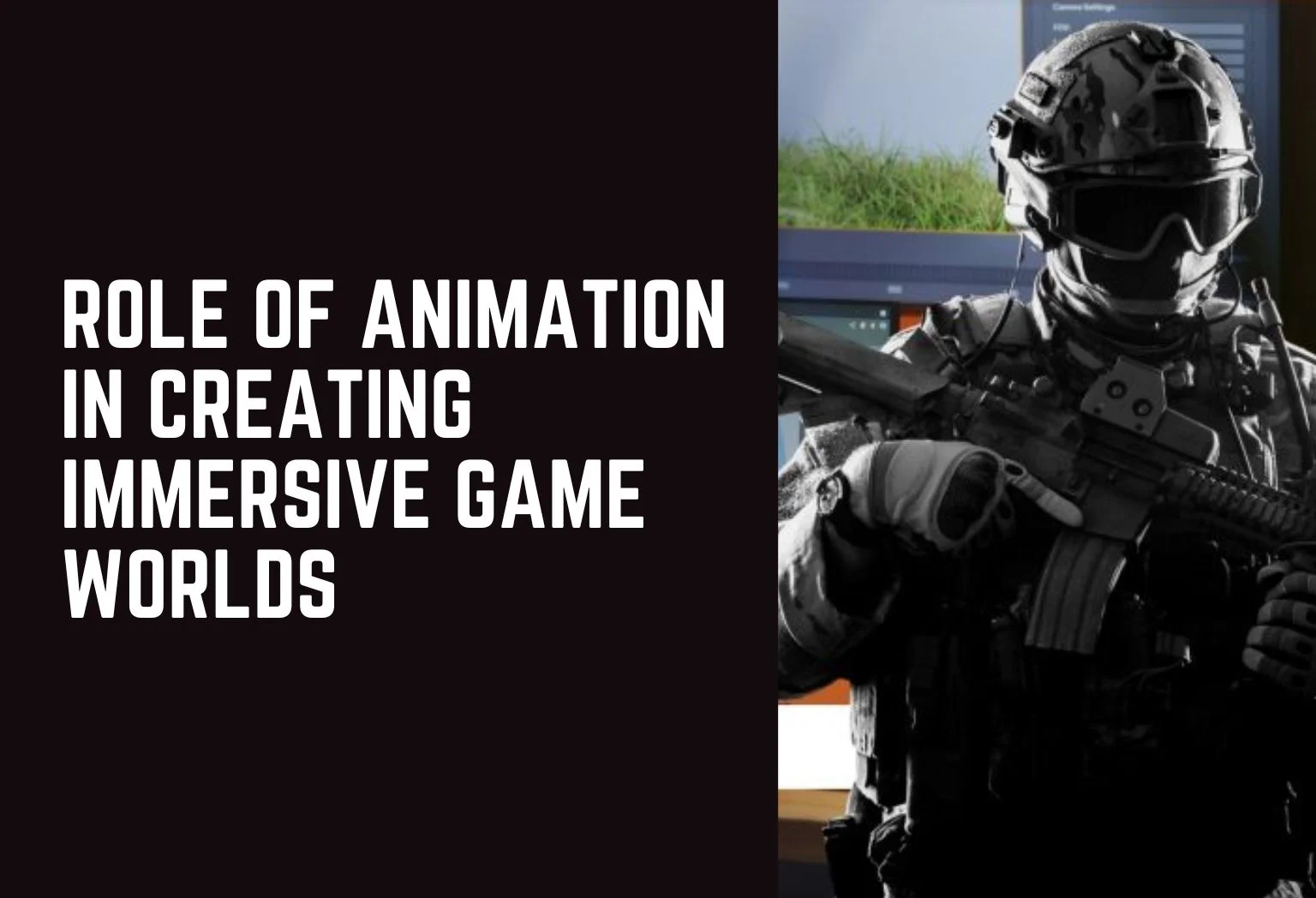
Animation is the lifeblood of modern video games. It is not just about bringing characters to life, it shapes the entire world, influences gameplay, and engages players on a subconscious level. Whether it’s the fluid motion of a hero navigating a complex environment, the subtle sway of trees in a forest, or the dramatic effects of magic spells, animation communicates meaning, emotion, and intention. Without it, even the most visually stunning graphics can feel static, mechanical, or lifeless.
In today’s competitive gaming landscape, immersive worlds are a key differentiator. Players expect realistic, believable, and responsive environments that react dynamically to their actions. The way characters move, objects behave, and environmental elements respond all contribute to immersion. Animation is central to this experience, bridging the gap between art and interactivity.
From AAA titles to indie games, developers increasingly understand that animation is not an afterthought, it is a core pillar of design. This blog delves into how animation contributes to immersive game worlds, explores the techniques that make it effective, and examines its impact on gameplay, storytelling, and player engagement.
The Role of Animation in Player Immersion
Animation fundamentally affects how players perceive a game world. When executed well, it creates believable motion and interactions, making players feel like they are inhabiting a living, breathing universe. Immersion is achieved when every movement, gesture, and environmental response aligns with the game’s physics, narrative, and aesthetic style.
Character animation is particularly impactful. Players often identify strongly with protagonists, and smooth, expressive motion enhances this connection. Subtle gestures, like a character adjusting their stance before jumping, blinking, or reacting to environmental stimuli, create emotional resonance. These details make players feel that their avatar is an extension of themselves, deepening engagement and investment in the game world.
Environmental animation also contributes to immersion. Dynamic elements, such as wind-blown foliage, flowing water, or the flicker of torches, signal that the world is alive. Enemy behaviors, animal movements, and crowd reactions further reinforce the sense of a responsive, interactive space. When all these elements harmonize, players experience a seamless fusion of visual, auditory, and interactive cues that draws them into the game’s narrative.
Animation Techniques That Enhance Immersion
Creating immersive animation involves a combination of technical skill, artistic judgment, and narrative understanding. Key techniques include:
- Motion Capture and Performance Animation
Motion capture allows developers to record real human movements and translate them into digital characters. This technique produces realistic, fluid animations that convey emotion and personality. In action games, motion capture can capture the subtleties of combat, while in narrative-driven titles, it conveys facial expressions and gestures essential for storytelling. - Procedural Animation
Procedural animation uses algorithms to generate movement in real-time based on player input or environmental factors. This technique is especially useful for physics-driven interactions, such as ragdoll effects, dynamic terrain response, or adaptive character locomotion. It ensures that animations feel natural, even in unpredictable gameplay scenarios. - Keyframe Animation
Keyframe animation remains a foundational technique, allowing animators to craft precise movements and timing. It is particularly effective for stylized games or scenarios requiring exaggerated or fantastical motions, where realism is secondary to visual storytelling. - Blend Trees and Animation States
Modern game engines allow animators to blend multiple animation states dynamically. For instance, a character can transition smoothly from walking to running, then into a jump or dodge. Blend trees and state machines ensure these transitions feel natural and responsive, preventing jarring motion that could break immersion. - Environmental and Particle Animation
Animation extends beyond characters. Particles, weather effects, lighting changes, and interactive environmental elements add depth and realism. Flowing rivers, falling leaves, dust clouds, and fire all contribute to sensory engagement, reinforcing the believability of the world.
The Impact of Animation on Gameplay
Animation does not just look good, it affects how games are played. Responsive and intuitive character movement influences player strategy, timing, and control. For example, the subtle wind-up of a melee attack informs players about the timing of strikes, creating a tactile connection between input and action.
Enemy animations communicate behavior and threat levels. In stealth or action games, players read visual cues to anticipate attacks or plan evasive maneuvers. Well-designed animation ensures these cues are clear, giving players a sense of agency and mastery.
Additionally, environmental animation can shape exploration and decision-making. Animated objects that react to player interaction, such as crates that topple, destructible walls, or wildlife that flees, signal that the world is dynamic and interactive. This responsiveness encourages experimentation, curiosity, and deeper engagement.
Animation as a Storytelling Tool
Beyond gameplay mechanics, animation serves as a narrative device. Facial expressions, body language, and subtle gestures convey emotion, relationships, and plot developments without the need for dialogue. Cutscenes often rely heavily on animation to deliver dramatic moments, while in-game animations ensure that players experience story beats organically during gameplay.
Consider a character pausing to look at a distant landscape, sighing, or reacting to an unseen threat. These small animated details communicate context and emotion, enriching storytelling. Environmental animation also supports narrative, with dynamic lighting, weather, and particle effects reinforcing the mood and tone of the scene. Through these techniques, animation transforms static visuals into living stories that players can feel and interact with.
Case Studies: Animation Driving Immersion
The Last of Us Part II demonstrates the power of character animation in storytelling. Facial expressions, gestures, and movement are meticulously crafted, conveying subtle emotions and reinforcing narrative tension. Players report heightened emotional engagement due to the believable performances, showing how animation directly influences immersion.
Red Dead Redemption 2 showcases environmental animation on an unprecedented scale. Wildlife behavior, weather systems, and dynamic environmental interactions create a world that feels alive. Player actions have realistic consequences, and the seamless integration of animation enhances both exploration and narrative experience.
Hollow Knight, while stylized, illustrates how keyframe and particle animations can create an immersive, responsive world. Combat and movement are finely tuned, and environmental cues guide player attention and interaction, demonstrating that even non-realistic animation can deeply engage players.
The Technical Pipeline for Animation
Creating high-quality animation involves a structured pipeline. Artists begin with concept sketches and storyboards, defining key actions, gestures, and interactions. Motion capture or keyframe animation is then applied to characters, while procedural systems handle dynamic responses to player input and environment. Animators work closely with technical teams to integrate these elements into game engines, ensuring smooth transitions, blend states, and real-time responsiveness.
Environmental and particle animation runs in parallel, often involving physics simulations and procedural techniques to create realistic or stylized effects. Optimization is critical, as complex animations can impact frame rates and responsiveness. The pipeline is iterative, with frequent playtesting to ensure that motion feels natural and enhances gameplay.
Emerging Trends in Game Animation
The future of game animation is increasingly influenced by AI, procedural systems, and real-time rendering. AI-assisted animation can automate repetitive tasks, generate realistic motion based on limited input, and adapt animations to changing gameplay scenarios. Procedural systems allow worlds to respond dynamically to player choices, creating emergent gameplay moments that feel organic.
Virtual reality (VR) and augmented reality (AR) also push animation into new dimensions. Player immersion relies on precise, responsive animations that react to head tracking, hand gestures, and spatial interactions. Even minor inaccuracies can break immersion, highlighting the importance of meticulous animation in emerging platforms.
Stylization remains relevant as well. Indie and mobile games increasingly use exaggerated, artistic animations to convey emotion, personality, and gameplay cues without relying solely on realism. This trend shows that animation is both a technical and artistic medium, adaptable to the needs of the game and audience.
Also Read: The Future of Game Art
Conclusion
Animation is more than visual spectacle, it is a core component of immersive game worlds. From character motion to environmental dynamics, animation shapes player perception, engagement, and storytelling. Well-executed animation informs gameplay, communicates narrative, and deepens emotional investment, making games feel alive and interactive.
The combination of motion capture, keyframe artistry, procedural systems, and environmental animation allows developers to create worlds that are both believable and captivating. As technology evolves, animation will continue to play a critical role in shaping experiences that are immersive, responsive, and emotionally resonant.
In a competitive gaming landscape, animation is no longer an optional enhancement, it is a strategic asset that defines how players experience and remember a game. By investing in thoughtful, high-quality animation, developers can craft worlds that captivate, engage, and leave a lasting impact on players.