

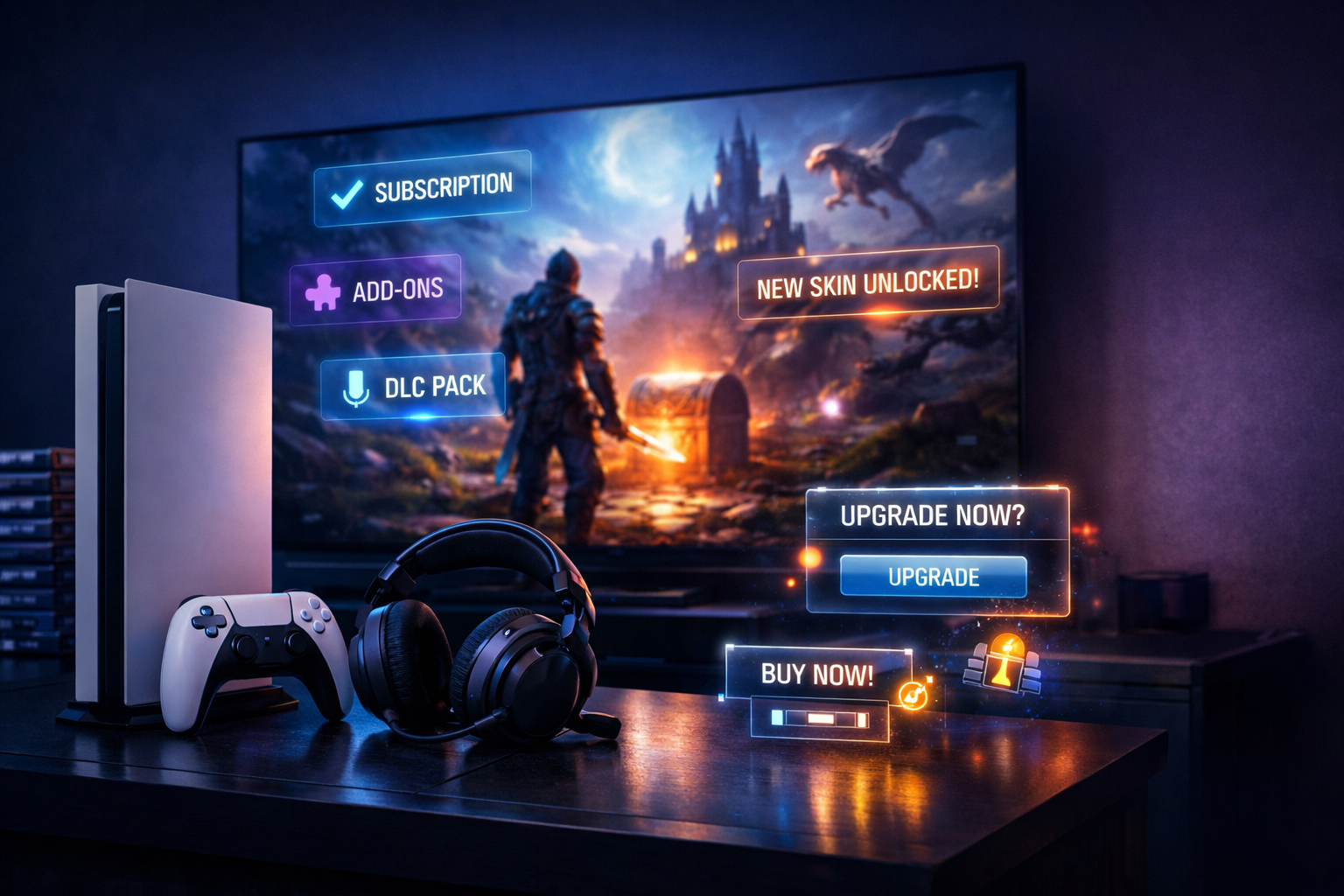
Console gaming is often seen as one of the easiest and most budget-friendly ways to enjoy video games. You buy a console, connect it to your TV, insert a game, and start playing. For beginners, this feels simple and stress-free compared to other gaming options. There is no need to worry about technical parts, system requirements, or complex installations.
However, what most people do not realize is that the real cost of console gaming is not just the console itself. Over time, many small and hidden expenses start to appear. These costs are rarely discussed in advertisements or reviews, but they slowly become part of the gaming lifestyle. Some are necessary, some are optional, and some are psychological.
This blog explains all the hidden costs in very simple language. The goal is not to discourage gaming, but to help you understand what you are really signing up for in the long run.
What Is Console Gaming and Why People Choose It
Console gaming means playing video games on a dedicated gaming device that is designed mainly for entertainment. These devices connect to a TV or monitor and are controlled using game controllers.
People choose console gaming because it feels easy and accessible. You do not need much technical knowledge to start. Everything works out of the box, and most games are optimized for the system.
For new gamers, consoles feel more welcoming than other platforms. You do not need to adjust graphics settings, install drivers, or upgrade parts regularly.
- Simple plug-and-play experience
- No complex system settings
- Designed specifically for gaming
Console gaming also feels more social. Many people enjoy playing on a couch with friends or family. This makes it feel more like shared entertainment rather than a solo technical hobby.
Initial Setup Considerations
When buying a console, most people only think about the main device. But the setup includes more than just the console itself.
You need a proper display, enough space, and a comfortable environment. Without these, the gaming experience feels incomplete or uncomfortable.
Many gamers end up upgrading their room or buying extra items just to make gaming more enjoyable.
- A good TV or monitor for visuals
- Proper cables and power setup
- Comfortable seating and room layout
You may also need storage space, ventilation, and a dedicated area for the console. These are small things, but they add to the overall cost and planning.
Online Memberships and Subscription Services
Modern console gaming heavily depends on online services. Many popular games require internet access, especially for multiplayer modes.
To play online, you often need a paid membership. These memberships also offer extra features like free games, cloud saves, and exclusive discounts.
At first, this feels affordable and useful. But over time, these subscriptions become a permanent monthly or yearly expense.
- Online multiplayer access
- Free rotating game libraries
- Cloud storage and online profiles
The problem is that once you get used to these services, it becomes hard to stop paying for them. They become part of the gaming routine.
Game Editions and Buying Choices
Not all games come in just one version anymore. Most modern games offer multiple editions.
The standard edition includes the base game. The deluxe or premium editions include extra content, early access, or special items.
These premium versions are heavily marketed and make players feel like they are missing out if they choose the basic option.
- Standard vs deluxe editions
- Digital downloads vs physical copies
- Exclusive content in higher editions
Digital games are convenient, but they cannot be resold or shared easily. Physical games can be traded, but they take up space and can get damaged.
Over time, these small choices affect how much you spend without realizing it.
Accessories That Add Up
Most consoles come with one controller. That feels enough at first, but soon you realize one is not enough.
If you play with friends or family, you need extra controllers. If you play online, you may want a headset. If you play long sessions, you may want charging docks or grips.
These accessories feel optional, but they slowly become part of the standard setup.
- Extra controllers for multiplayer
- Headsets for voice chat
- Charging docks and cable replacements
Individually, these items feel affordable. But together, they create a steady stream of spending.
Internet Requirements and Performance
Console gaming today is almost impossible without good internet. Games are no longer small. They require large downloads and frequent updates.
Online games also need stable connections to avoid lag, disconnections, or poor performance.
This means your internet plan becomes part of your gaming cost.
- Stable internet for online play
- Large downloads for updates
- Cloud gaming and streaming
Even if your console works perfectly, bad internet can ruin the experience. Many gamers upgrade their internet just for gaming.
Repairs, Maintenance, and Upgrades
Consoles are machines, and machines wear out. Controllers break, buttons stop working, and storage fills up.
Over time, you may need repairs or replacements. These costs usually appear after the warranty ends.
Storage is another hidden issue. Modern games are large and fill up space quickly.
- Controller wear and stick drift
- Storage expansion for more games
- System cleaning and overheating
These problems do not appear immediately, but after months or years, they become unavoidable.
In-Game Purchases and Spending Triggers
One of the biggest hidden costs in console gaming is in-game purchases.
Many games offer cosmetic items, battle passes, or special characters. These are optional, but they are designed to feel necessary.
Psychologically, these systems encourage small, repeated spending.
- Limited-time offers
- Cosmetic upgrades and skins
- Battle passes and loot systems
The problem is not one purchase. The problem is how easy it is to keep buying again and again without noticing the total.
The Long-Term Commitment of New Generations
Console gaming is not a one-time purchase. Every few years, a new generation of consoles is released.
Old consoles slowly stop receiving new games and updates. To stay relevant, players feel pressure to upgrade.
This restarts the entire spending cycle.
- New console releases
- Old systems losing support
- Rebuying accessories and games
Even if your old console still works, you may not be able to play new titles.
Psychological Costs Most Gamers Ignore
Beyond money, console gaming also has psychological costs.
Many gamers feel pressure to keep up with friends, trends, and new releases. This creates a constant feeling of needing the latest version.
Marketing plays a big role in this.
- Fear of missing out
- Social pressure from friends
- Constant new releases
This emotional spending is one of the biggest hidden costs because it feels normal.
Time as a Hidden Cost
Time is another cost people rarely think about.
Console gaming requires time for updates, downloads, learning controls, and grinding for progress.
This time investment is not always bad, but it is still a cost.
- Long download times
- Grinding for rewards
- Learning new systems
Time spent gaming could be used for other activities. This is not a problem, but it is part of the real cost.
Energy and Environment Costs
Consoles consume electricity. The longer you play, the more energy is used.
This is not something gamers usually calculate, but it becomes part of household expenses.
- Power usage during long sessions
- Heat and cooling needs
- Environmental impact
Over years of gaming, this becomes a noticeable factor.
Storage and Digital Ownership Issues
Digital games do not take physical space, but they take digital space.
Once your storage is full, you must delete games or buy more storage.
Also, digital ownership is limited. You do not truly own the game forever.
- Limited storage space
- No resale for digital games
- Dependence on online servers
If a service shuts down, you may lose access to games.
Social and Lifestyle Costs
Console gaming can affect lifestyle habits.
Long sessions may reduce physical activity, sleep, or social interaction.
Again, this is not always negative, but it is part of the full picture.
- Reduced physical movement
- Late-night gaming habits
- Less time for offline activities
Balance is important to avoid these issues.
Final Thoughts
Console gaming starts as a budget-friendly hobby. The initial experience feels simple, smooth, and enjoyable. For beginners, it is one of the easiest ways to enter the gaming world.
But over time, hidden costs slowly appear. Subscriptions, accessories, internet upgrades, repairs, in-game purchases, and new generations all add layers of spending.
No single cost feels extreme. That is why most people ignore them. But together, they transform console gaming into a long-term premium experience.
In the end, console gaming is affordable at the beginning, but it gradually becomes a high-end lifestyle if you want to stay updated, competitive, and fully involved.
The real secret is awareness. If you understand these hidden costs early, you can control your spending, set limits, and enjoy gaming without financial surprises. Console gaming is not bad, but it is not as cheap as it first appears.