

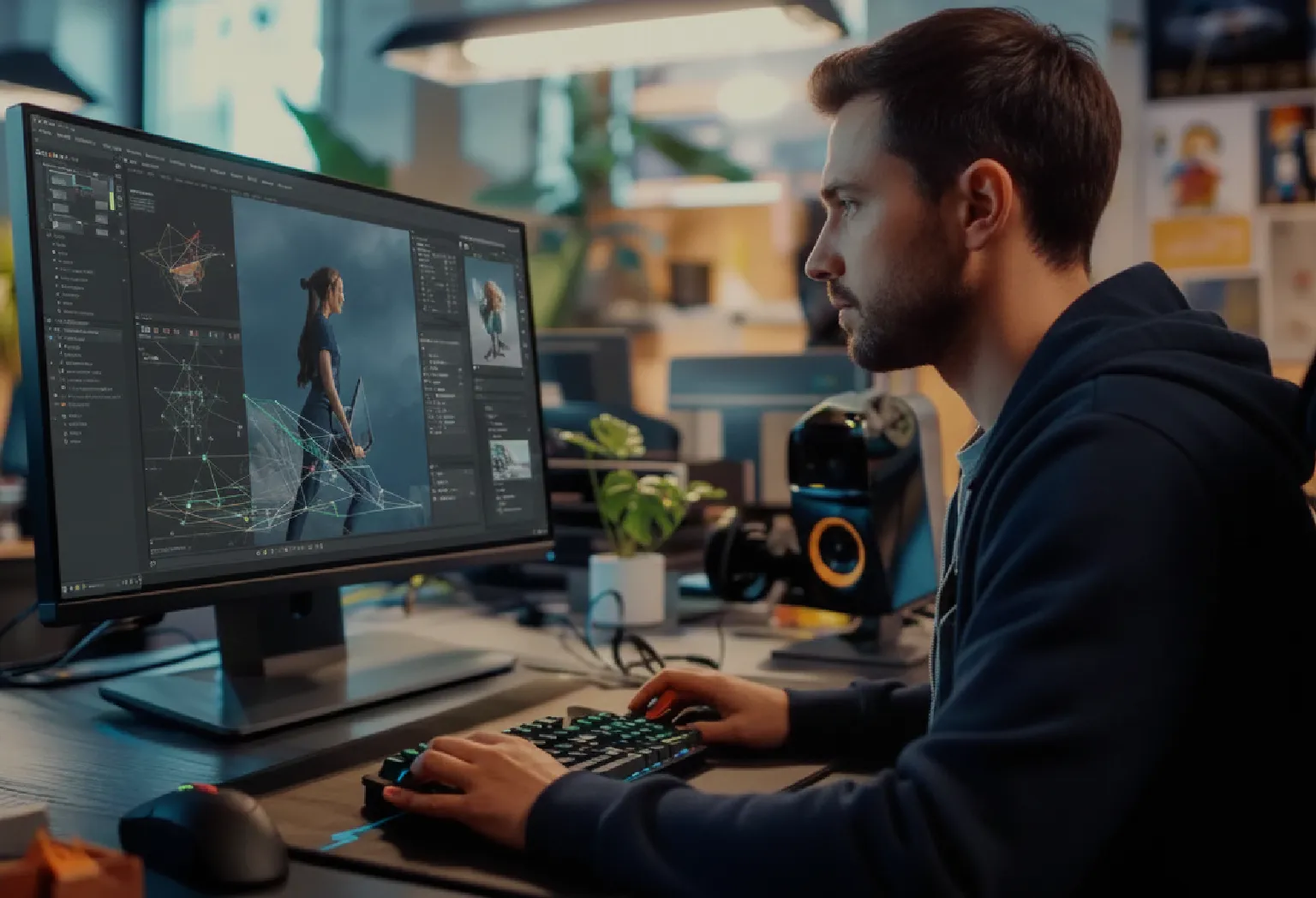
Game art has always been more than decoration—it has been a vessel for mood, emotion, and immersion. In early gaming, storytelling relied primarily on text or simple visual cues. Today, modern pipelines allow visuals to carry narrative weight on their own. Art is no longer just a backdrop; it is an active storytelling medium.
As game worlds become richer and more cinematic, their art pipelines have evolved to support this demand. Artists now use advanced tools, real-time rendering systems, and specialized workflows that enable rapid iteration, collaborative development, and higher production quality than ever before. These pipelines are built not only to create assets but to tell stories through every texture, model, and animation on screen.
The Shift Toward Real-Time and Procedural Workflows
Real-Time Rendering and Its Narrative Impact
Real-time rendering engines like Unreal Engine and Unity have transformed how visuals support storytelling. Instead of pre-rendered scenes, developers can now create dynamic environments where lighting, weather, and animations respond to player actions.
This shift gives storytellers more creative freedom. Scenes no longer rely solely on scripted sequences. Instead, players experience evolving worlds where visual storytelling adapts to them, enhancing emotional impact.
Modern shaders, volumetric lighting, and physically-based rendering create scenes that feel grounded and cinematic. In these environments, small visual cues—such as dust settling in sunlight or reflections on a rain-soaked street—help convey mood and narrative intent without a single line of dialogue.
Procedural Generation Enhancing World Depth
Procedural tools like Houdini have opened the door to dynamically generated landscapes, cities, and environments. These are not random structures but carefully tuned systems that support narrative design.
Procedural workflows allow:
- Vast worlds without repetitive assets
- Terrain that reflects lore and history
- Architecture that evolves logically
This makes game worlds feel like real, functional ecosystems with stories built into their foundations. A canyon carved by ancient floods or an abandoned town overrun by nature becomes a storytelling device through the visual design itself.
Integrating AI in the Modern Art Pipeline
AI-Assisted Concept Art and Its Influence on Visual Narratives
Artificial intelligence has become a powerful tool in concept art, enabling artists to explore more ideas quickly. Rather than spending days crafting a single mood piece, art teams can now generate multiple variations and refine them into more polished concepts.
These early explorations shape the game’s narrative identity. With more options available, directors and writers can better align visual style with the story’s emotional tone. AI does not replace creativity—it accelerates it, helping artists discover unexplored directions that enrich storytelling.
AI for Asset Optimization and Pipeline Efficiency
AI is equally valuable in technical art tasks. Modern pipelines use machine learning to:
- Upscale textures
- Clean scans
- Generate LODs
- Assist with rigging and animation
- Automatically retarget movement
By handling repetitive work, AI frees artists to focus on storytelling. When creators spend more time crafting emotional elements—expressive characters, symbolic environments, subtle animations—the game becomes a more engaging narrative experience.
Hyper-Realistic Characters and Their Role in Storytelling
Advanced Character Modeling and Emotional Depth
Modern pipelines include sophisticated character creation processes involving sculpting tools like ZBrush, texturing workflows with Substance Painter, and real-time shaders that simulate skin, hair, and fabric with remarkable accuracy.
These improvements enhance the way characters express emotion. Wrinkles around the eyes, micro-expressions, subtle changes in posture—all these visual details add layers of narrative complexity. Players form stronger connections with characters who look and behave believably.
Every aspect of a character’s appearance—from their clothing to scars or tattoos—can now be used as storytelling shorthand, allowing the visual design to reveal history, personality, and conflict.
Motion Capture and Performance-Driven Narratives
Motion capture systems have enabled lifelike performances that bring game stories closer to cinema. Actors’ movements and facial expressions are captured in detail, giving characters authenticity.
This realism enriches storytelling by:
- Communicating emotion more clearly
- Supporting more nuanced dialogue scenes
- Enhancing physical storytelling during gameplay
Modern pipelines blend motion capture with procedural animation, meaning even non-cutscene moments feel alive. When a character hesitates, limps, or reacts to the environment naturally, their journey feels personal to the player.
Also Read: The Future of Game Art
Environment Art as a Narrative Foundation
World-Building Through Visual Language
Environment art has become a core storytelling pillar. Artists build worlds that teach players about history, culture, conflict, and mystery through design alone. Objects placed in a corner, graffiti on a wall, or architectural choices can all serve narrative purposes.
Modern pipelines emphasize this layered approach. Environment teams rely on modular workflows, trim sheets, and reusable materials to build detailed worlds efficiently. With these tools, they can focus more on storytelling details rather than repetitive asset creation.
Lighting as a Narrative Tool
Lighting in modern pipelines is no longer just a technical task. It is integral to emotional storytelling. Real-time global illumination, ray tracing, and volumetrics give artists more control over how scenes feel.
Light can guide the player’s eyes, highlight story-critical areas, or evoke mood. Whether it’s warm sunlight suggesting safety or cold blue tones hinting danger, lighting reinforces narrative beats at every moment.
Animation Pipelines That Support Story Expression
Procedural and Physics-Based Animation Enhancing Authenticity
Animation systems today blend handcrafted animation, mocap, and procedural layers. This hybrid approach allows characters and creatures to respond dynamically to the world.
Small interactions—dust kicking up under footsteps, clothing reacting to motion, or foliage brushing against characters—add narrative realism. These touches make the world feel reactive and alive.
Physics-based interactions also support emergent storytelling, where the narrative evolves through player actions rather than scripted scenes. This dynamic approach relies heavily on animation systems that can adapt on the fly.
Facial Animation and Emotional Storytelling
Modern facial animation pipelines use blendshapes, AI-driven tracking, and sophisticated rigs to create expressive faces that convey emotion vividly.
This matters because storytelling often hinges on subtle interactions:
- A moment of hesitation before a hard decision
- A smile that becomes forced
- Micro-twitches that reveal hidden tension
These details communicate narrative weight without ever needing dialogue or exposition.
Streamlined Collaboration Across Art Disciplines
Cross-Department Pipelines Improving Story Consistency
Modern game art pipelines emphasize integration between departments—concept art, 3D modeling, animation, VFX, narrative design, and gameplay. Tools like Perforce, ShotGrid, and real-time collaborative engines ensure everyone works within the same visual and narrative framework.
This unity is essential for storytelling. When environments, characters, and effects align with narrative themes, the experience feels cohesive and intentional.
Iterative Development Supporting Stronger Narratives
Today’s pipelines allow constant iteration. Artists can tweak assets in the engine and instantly see how they affect the story context. This cycle of rapid feedback leads to more polished and emotionally resonant scenes.
Writers, directors, and designers can experiment with pacing, tone, and visual metaphors with far more freedom than older pipelines allowed.
Cinematic Techniques in Real-Time Game Art
Camera Work Transforming Story Delivery
Modern art pipelines support advanced camera systems inspired by film: depth of field, dynamic framing, tracking shots, and handheld simulation.
These tools let developers communicate emotions visually—fear, excitement, loneliness, or triumph—through camera movement alone. Real-time cinematics blend seamlessly with gameplay, ensuring the narrative never breaks immersion.
Visual Effects as Emotional and Narrative Tools
VFX teams now play a key role in storytelling. Effects like smoke, fire, water, particle systems, and magical energy are crafted not just for spectacle but to support the story’s tone and lore.
For example:
- Particles drifting in ruins may symbolize past tragedies
- Soft glowing effects may indicate hope or healing
- Violent, chaotic effects emphasize danger and conflict
Modern pipelines allow VFX to react to gameplay and narrative triggers, making visual storytelling dynamic and impactful.
The Rise of Stylized Pipelines and Artistic Freedom
Stylization as a Narrative Identity
While realism dominates many AAA titles, stylized art pipelines have grown significantly. These pipelines use artistic exaggeration, unique color palettes, and custom shaders to create unforgettable visual identities.
Stylized art leaves room for metaphor and abstract expression. It communicates story themes through deliberate artistic choices rather than strict realism. Modern tools make these styles easier to produce, optimize, and animate, enabling unique storytelling in every genre.
Shader Art Driving Symbolic Storytelling
Custom shaders have become a powerful narrative device. Artists use them for transitions, emotional states, dream sequences, and thematic effects.
A shifting watercolor filter or a glitch effect during emotional turmoil can express feelings beyond what animation or dialogue can convey. Modern pipelines give shader artists the flexibility to experiment and tie these visual effects directly to story progression.
Optimization Pipelines that Preserve Visual Narrative Quality
Balancing Performance and Storytelling
As worlds grow more detailed, optimization becomes a narrative concern. Poor performance can break immersion, weakening the story’s impact. Modern pipelines use automated tools, profiling systems, and efficient asset workflows to ensure games run smoothly without losing visual richness.
Techniques like LOD management, mesh streaming, dynamic resolution, and GPU-driven rendering enable developers to maintain cinematic quality even on lower-end hardware.
The Role of Technical Art in Supporting Narrative Vision
Technical artists bridge the gap between creative and engineering teams. They ensure that visual storytelling ideas translate into optimized, functional in-engine assets.
Their role in modern pipelines includes:
- Building shader libraries
- Developing custom tools
- Streamlining workflows
- Ensuring art maintains performance budgets
This support helps narrative teams push boundaries without sacrificing player experience.
How These Pipelines Are Shaping the Future of Visual Storytelling
Immersive Worlds That Tell Stories Without Words
As pipelines become more sophisticated, visual storytelling grows more powerful. Environments feel alive, characters express authentic emotions, and visual metaphors enrich narrative depth.
Players experience the story through atmosphere, gesture, and space. Worlds respond to choices, creating personal narratives that stay with players long after the game ends.
Player-Driven Narrative Through Reactive Visuals
Modern pipelines enable visual systems that react dynamically to player decisions. Weather may change based on emotional tone, environments may degrade with conflict, or characters may visually evolve based on story outcomes.
This level of visual responsiveness strengthens narrative agency. Players feel like co-authors of the story, shaping the world through their actions.
Conclusion
Modern game art pipelines are redefining how stories are told in games. With advanced technologies, collaborative workflows, AI assistance, and real-time rendering, visual storytelling has become richer, more nuanced, and more immersive.
Games now communicate narrative through every pixel—lighting, environments, characters, animations, effects, and even shaders. As pipelines continue to evolve, the gap between interactive and cinematic storytelling will only shrink. Future games will not just tell stories; they will allow players to live them through deeply expressive and visually dynamic worlds.