

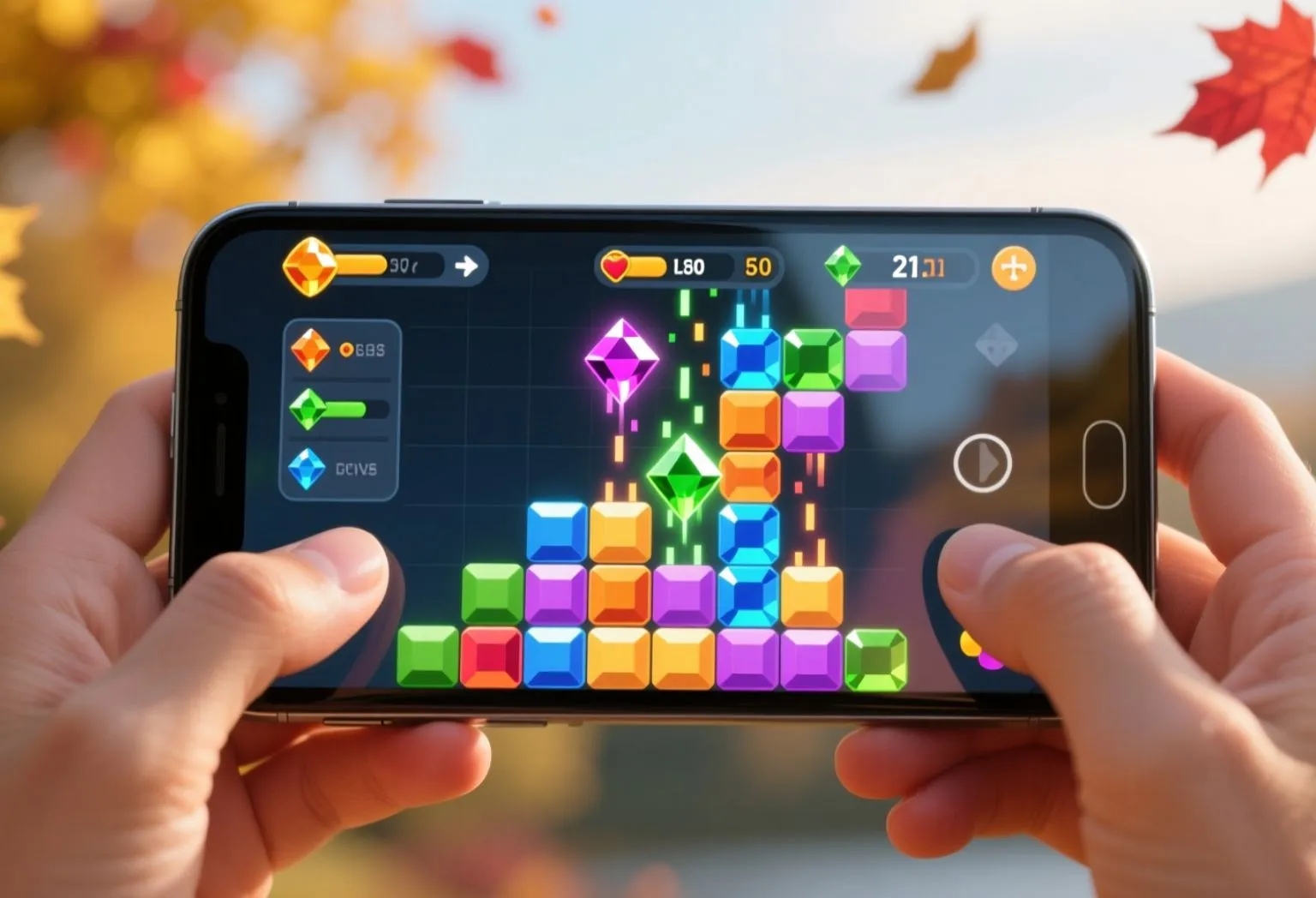
Mobile gaming has evolved into a major global industry, driven by rapid technological innovation and increasing user expectations. Among the most transformative technologies shaping this space, Artificial Intelligence (AI) stands out as a game-changing force. AI is not only influencing how mobile games look and feel but also revolutionizing how they are conceptualized, developed, personalized, and scaled for millions of players. Today, platforms like Gamefirms highlight how the top mobile game development companies are integrating AI deeper into their production and design workflows, pushing the boundaries of creativity and performance.
The Evolution of AI in Mobile Gaming
Initially, AI in gaming was limited to simple enemy behaviors and basic decision trees. However, with advances in machine learning and neural networks, AI has grown into a powerful tool capable of analyzing complex player behavior, generating real-time game content, and enhancing gameplay dynamics. In mobile gaming specifically, AI has become even more impactful because of the need to deliver fast, personalized experiences on devices with limited resources. AI now supports everything from level creation to predictive analytics, creating adaptable and intelligent systems that elevate mobile games far beyond their earlier forms.
AI in Graphics, Animation, and Visual Rendering
AI has made significant advancements in visual quality as well. Animation, once a time-consuming task requiring countless hours of manual work, has become faster and more accurate with AI-assisted tools. These systems can predict how characters should move between actions, generate realistic facial expressions, and smooth out transitions without the need for frame-by-frame design. Developers can now create more life-like characters even with smaller teams.
In terms of performance, AI-based optimization ensures that games run smoothly across a wide range of devices. By analyzing hardware capabilities in real time, AI adjusts graphical settings to balance performance and visual quality. This prevents lag on older phones while still delivering impressive graphics on high-end devices. AI visual upscaling also enhances textures and images without significantly increasing game size, allowing mobile experiences to achieve near-console quality visuals.
AI-Powered Game Design
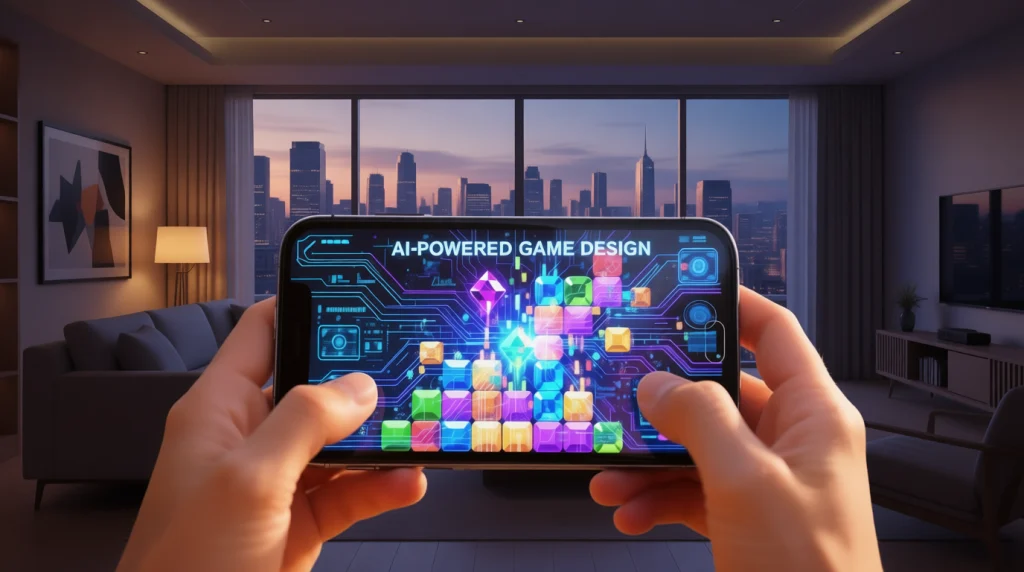
AI’s influence begins at the earliest stages of game design. Traditionally, designers had to manually craft every detail—levels, maps, environments, and behaviors. With AI, much of this work is now automated or assisted, enabling developers to focus more on creativity. One of the biggest breakthroughs is procedural content generation, where AI autonomously builds environments, missions, or puzzles that feel dynamic and fresh each time the player enters the game. This technology not only saves countless development hours but also enhances replayability, making games more engaging in the long run.
Another important shift is the quality of in-game characters. AI enables NPCs to behave more naturally and intelligently. Instead of predictable movements or repetitive actions, modern NPCs can learn from the player’s strategies, adapt during combat, and behave more cohesively with the game world. This creates a gameplay experience that feels alive, reactive, and personalized. AI-driven adaptive difficulty also ensures that players of all skill levels enjoy the game, as challenges are automatically tailored to their performance, reducing frustration and keeping them invested.
AI in Development Workflows and Production
AI is transforming the backend of game development just as much as the front-end experience. Coding assistance tools powered by AI help developers streamline repetitive tasks, generate scripts automatically, and detect bugs before they become major issues. This improves efficiency and significantly reduces development time.
Quality assurance, traditionally one of the most time-consuming phases, benefits heavily from AI. Automated testing tools can simulate thousands of gameplay sessions across various scenarios, uncovering issues that manual testers would take weeks to identify. These AI-driven tests can predict potential bottlenecks, crashes, and inconsistencies at remarkable speed, enabling developers to release more stable and polished games.
AI has also improved audio experiences. Features such as real-time voice translation, emotion-recognition voice reactions, and AI-powered sound optimization contribute to more immersive gameplay, especially in multiplayer environments.
AI in Player Personalization and Engagement
One of AI’s greatest strengths in mobile gaming is its ability to personalize the experience for each user. Mobile games serve millions of players with different skill levels, interests, and habits, making personalization essential for long-term engagement. AI continuously analyzes player behavior—how they explore levels, how quickly they learn, what items they prefer, and what challenges they struggle with. Using this information, the game adjusts itself, offering missions, items, or rewards that align with the player’s preferences.
AI also improves matchmaking. Instead of simply pairing players based on rank, modern AI systems consider factors such as playstyle, response speed, win/loss history, and even behavioral tendencies to create fairer, more enjoyable matches. This elevates competitive gaming, making every match feel well-balanced and dynamic.
Another area where AI excels is recommendations. Whether it’s suggesting the best weapon upgrade or the ideal game mode for a player’s style, AI-driven insights enhance both gameplay experience and monetization opportunities without feeling intrusive.
AI in Monetization and Revenue Optimization
Monetization is a core element of mobile gaming, and AI is playing an increasingly critical role in optimizing revenue without compromising user satisfaction. Instead of random offers, AI uses predictive models to analyze when and what a player might be willing to purchase. This leads to more meaningful suggestions that players find relevant rather than annoying.
AI also greatly improves ad experiences. It can identify the perfect moments to display ads, ensuring they do not interrupt high-intensity action or critical gameplay sequences. This reduces frustration and increases the chances of ad engagement. In addition, AI’s ability to detect unusual activity helps prevent fraud and protects game economies from exploits, creating a more secure environment for both developers and players.
AI for LiveOps and Post-Launch Success
Modern mobile games thrive on LiveOps—the continuous updates, challenges, and events that keep players returning long after the initial release. AI helps automate much of this process. Developers can use AI to manage seasonal events, reward systems, limited-time challenges, and even holiday-themed changes without requiring constant manual updates.
Community management also benefits from AI. Automated moderation tools can filter inappropriate language, detect toxic behavior, and remove spam before it harms the community. This ensures that the game’s social space remains safe, positive, and welcoming.
AI in Player Retention and Long-Term Engagement
Retention is one of the most critical challenges in mobile gaming. AI helps studios identify early signs of disengagement by analyzing behavior such as reduced playtime, slower progression, or repeated failures in certain levels. Through predictive modeling, AI can determine when a player might leave and trigger targeted actions—such as rewards, reminders, or special offers—to bring them back.
Instead of mass push notifications, AI ensures players receive personalized messages based on their specific habits and preferences. This significantly increases re-engagement rates while maintaining a positive user experience.
Why AI Gives Game Studios a Competitive Advantage
AI gives developers a substantial edge in almost every aspect of game creation and management. It shortens development cycles, reduces costs, enhances creativity, and delivers more stable and immersive experiences. Player engagement grows because the game adapts and responds intelligently. Monetization becomes more seamless, personalized, and effective. Studios that invest in AI now are better positioned to thrive in the future as user expectations continue to rise and competition becomes more intense.
The Future of AI in Mobile Gaming
The future of AI in mobile gaming promises innovations that will reshape the industry. Fully autonomous game creation is on the horizon, where AI will generate levels, characters, and even storylines with minimal human direction. Emotion-sensitive gameplay will allow games to adapt to a player’s emotional state, adjusting difficulty or visuals based on stress or excitement levels. AI companions will grow more advanced, learning from player interactions and evolving throughout the game.
AI will also play a crucial role in augmented reality (AR) and virtual reality (VR) gaming, transforming how these experiences interact with real-world environments. Real-time neural rendering will push visual fidelity forward by optimizing graphics dynamically, ensuring even low-end devices can deliver high-quality visuals.
Conclusion
AI is fundamentally transforming mobile game development. From designing dynamic worlds to enhancing performance, improving personalization, and optimizing monetization, AI has become the cornerstone of modern mobile gaming. As innovation continues, AI’s role will only grow deeper, making games more intelligent, immersive, and responsive.
Platforms like Gamefirms are helping showcase these advancements, highlighting how studios embracing AI are building the next generation of mobile gaming experiences. With AI at the center of development strategies, the future of mobile gaming promises to be more exciting and innovative than ever before.